Ein älters Paar, Mann und Frau, am Strand. Er hat küsst sie auf ihre rechte Seite. Sie lächelt direkt in die Kamera.

80 new ways to say thank you in French

18 March 2025

Author:

French offers a number of ways to say „thank you“. Whether you want to say „thank you“ for a small gesture, express your deepest gratitude or say thank you appropriately in formal conversations - there is much more than just „Merci“. In this guide, we’ll show you dozens of different ways to say thank you in French. So take a look at the options and get to know charming and lesser-known expressions as well as classic phrases.

Why is „thank you“ in French so important?

In French culture, politeness and respect are widespread in everyday interactions. A „thank you“ – or „merci“ in French – is not just a matter of politeness, but an expression of appreciation and attention towards others – whether in a café, in a shop or during a friendly conversation. If you know the right way to say „thank you“, you are signalling to your counterpart that you understand and respect French culture.

The three main reasons why „thank you“ is important in French:

  • Sign of politeness: In France, good manners are essential and a simple „Merci“ shows respect and appreciation.
  • Cultural understanding: The right way to say „thank you“ signals that you appreciate French culture and endeavour to treat people with respect.
  • Improving interpersonal relationships: Gratitude opens doors – whether in everyday life, at work or when travelling. A polite „thank you“ creates a positive atmosphere and leaves a good impression.

How to say „thank you“ in everyday French

French offers a multitude of ways to say „thank you“ – from formal to casual, for everyday life or special occasions. To help you find the right phrase for every situation, here is an overview of the most common expressions and their possible uses. Let's start with the more common everyday expressions!

How to formally thank someone in French

In formal situations – such as business meetings, official occasions or when dealing with unknown people – it is particularly important to choose the right way to express yourself. French offers elegant and respectful ways to say „thank you“. Here are the most important expressions to say „thank you“ in a stylish and appropriate way.

Mehrere Erwachsene stehen im Büro für eine Besprechung zusammen und lachen.

How to say „thank you“ in French slang

If situations are particularly relaxed and informal, a casual „thank you“ is also appropriate – for example, between friends. Here are some typical expressions that will make you look authentic even in informal conversations.

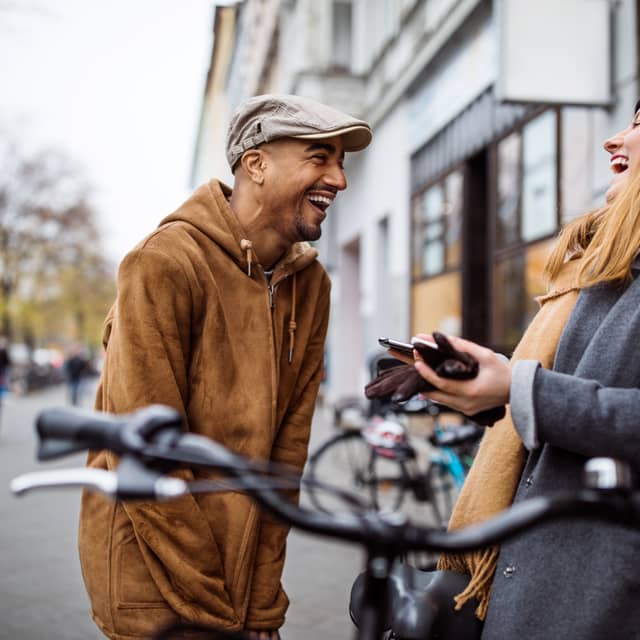
Ein junger Mann fährt auf einem hellblauen Herrenfahrrad. Auf dem Lenker sitzt eine junge Frau. Sie trägt ein kurzes rotes Latzkleid. Die Arme hebt sie in die Höhe. Beide lächeln.

What you can reply to „thank you“ in French

A friendly „thank you“ deserves an appropriate response – even in French. Whether you want to reply casually, politely or formally is up to you.

Thank you as the key to cooperation

Whether in everyday life, in formal situations or in casual conversation – the right choice of expression can make a big difference and have a positive influence on relationships. With the phrases presented here, you are ideally equipped to express your gratitude in style in any situation. Try it out – even a simple „Merci“ is often the key to a smile or a nice conversation.

Still not enough? In a French course, you can practise what you have learnt and learn many other useful phrases for work or everyday life.

Learn French with Berlitz

With our flexible French courses, you can improve your skills anytime and according to your preferences – with qualified trainers and the proven Berlitz Method.

Related Articles

26 February 2024

26 February 2024

A useful beginner’s guide to the months of the year in French
29 September 2023

29 September 2023

A definitive beginner’s guide to the days of the week in French
4 February 2022

4 February 2022

23 useful ways to say hello in French, no matter the situation